
Taishu Engeki Created Affordable Entertainment Kabuki became a luxury experience, so what was left for families and the general population?
A kabuki seat can cost up to 30,000 yen and still be hard to get. Comparatively, A Taishu Engeki ticket costs around 2,000 yen and comes with a three hour performance filled with drama, dance, and relatable human emotion.
The difference is not just about price, it’s about reaching the population.
In Japan’s performing arts landscape, a clear hierarchy has long existed. Kabuki, “noh” (masked performance art), and “bunraku” (puppet theatre) occupy the top tier, state-funded, internationally celebrated arts, which are taught in universities, and attended by the cultural elite. Below them, largely ignored by scholars, journalists, and government institutions alike, lives Taishu Engeki (大衆演劇): the theatre of the masses. And it has been thriving for over a century on its own terms.
Japanese Arts History Repeats Itself
Here is the paradox: kabuki was not always prestigious. It began in the 17th century as raw, rowdy entertainment for commoners the very people taishu engeki serves today. Over time, kabuki was adopted by the cultural establishment, polished, institutionalised, and eventually designated a UNESCO Intangible Cultural Heritage. Taishu engeki, which shares the same historical roots, never made that journey. It stayed close to the working class, the neighbourhoods, the onsen hotels and community halls where regular people live their lives.
The result is a form of theatre that is simultaneously ancient and invisible: deeply rooted in Japanese tradition, yet absent from school curricula, academic journals, and most tourist guides.
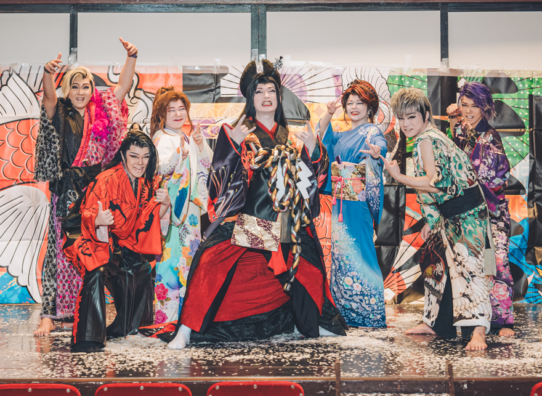
Taishu Engeki is Accessible for All
Taishu Engeki does not apologize for being affordable. Ticket prices sit well below those of kabuki, opera, or Broadway-style musicals.
It is extremely accessible and easy to attend a show:
- The shows run twice daily, every day of the month.
- Food and drinks are welcome in the theatre.
- There is no dress code.
- No prior knowledge of Japanese theatrical tradition is required to enjoy the show, because the dialogue is in modern, everyday Japanese, not archaic stage language.
- The theatres are small businesses, providing entertainment and a valuable “third space” for the community, outside of their home and workplace.
This is not a simplified version of high art. It is a different philosophy entirely: that theatre should reach people’s emotions first, impress scholars second or perhaps not at all.
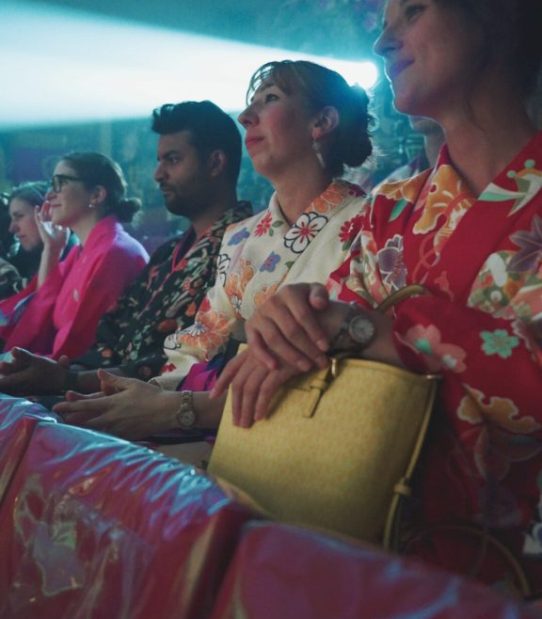
A Stigmatized Arts Culture
Despite its loyal following, taishu engeki has long faced stigma. Its itinerant troupes sleeping in theatres, cooking for themselves, changing cities every month were historically seen as social outcasts. Yet those same troupes are entirely self-sufficient, funding their own tours, building their own sets, and sewing hundreds of elaborate costumes without state subsidies.
In Tokyo today, only two dedicated taishu engeki theatres remain:
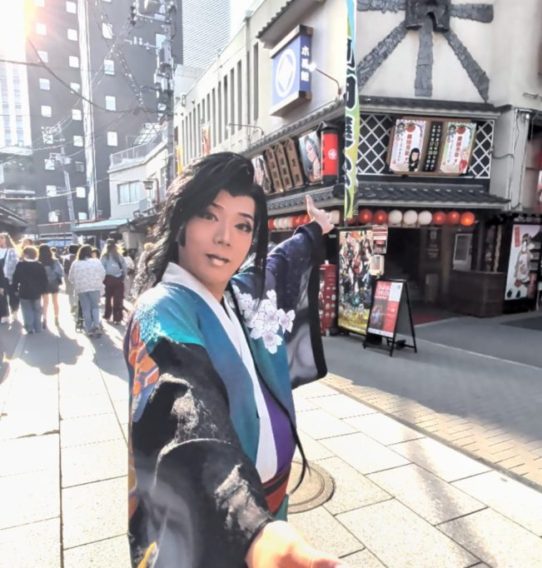
- Asakusa’s Mokubakan Theatre (pictured) – the “home” of Taishu Engeki in Japan
- Jujo Shinohara Hall, in the Kita Ward of North West Tokyo.
Each one represents not just a venue, but an act of cultural resistance, a deliberate refusal to let popular theatre be swallowed by prestige or forgotten by prosperity.
The Importance of Modern, Accessible Theatre
In an era when arts funding increasingly flows toward institutions that already have visibility, taishu engeki asks a fundamental question: who decides what culture is worth preserving? The answer, for over a century, has been given not by critics or committees, but by the audiences who keep coming back, night after night, for something real.