
An Introduction to Japanese Mythology Spirits, How Do They Work?
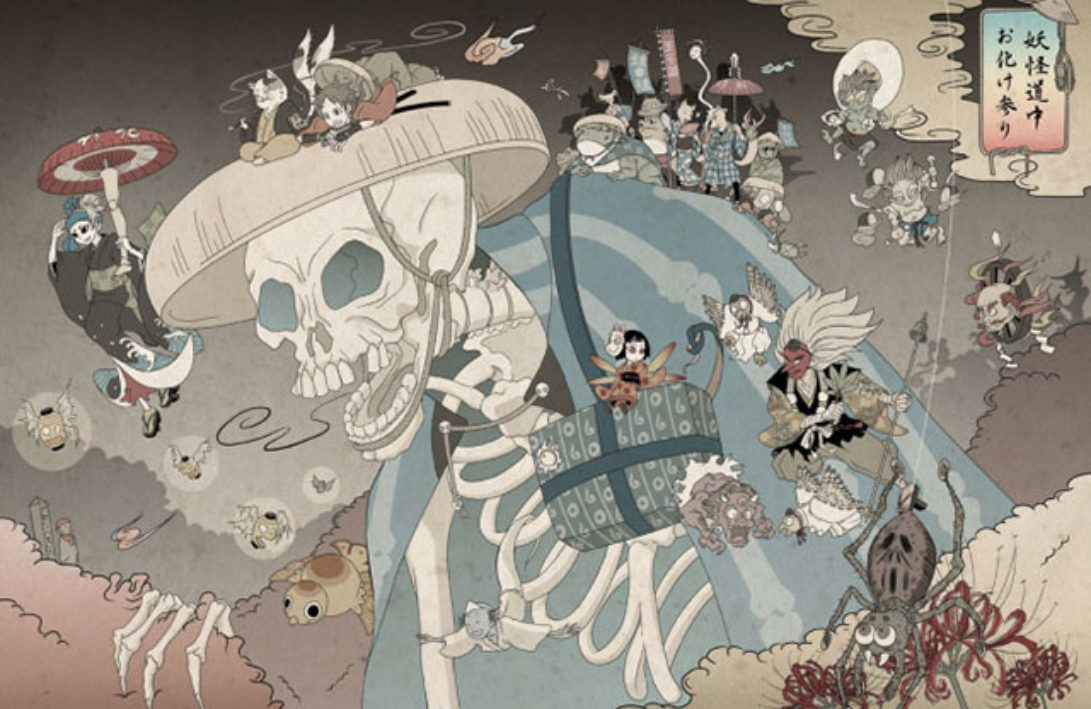
Every country and culture in the world will have their own myths and legends. In England, there is “Robin Hood” and “King Arthur”. In the United States, there is “Bigfoot”. In Australia, there is “Tiddalik the Frog”. Japan, being a country and culture with incredibly deep history, has many of it’s own legends and myths, many reflecting the Shinto and Buddhist traditions. Japanese mythology is a mix of stories about creation, stories, gods, spirits, supernatural creatures, and often have very relatable human stories about responsibility and duty.
Japanese Spirits
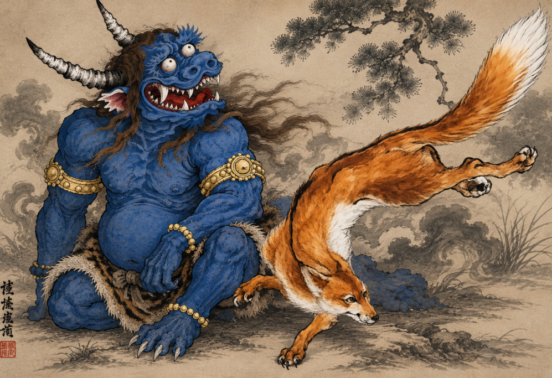
- Kitsune – Japanese Foxes, but with supernatural or magical powers. They are often portrayed as tricksters and pranksters, misleading humans with incredible shape-shifting abilities.
- Oni – Japanese demons or ogres which can represent both good or evil, depending on the individual story. Over time, the description of Oni in Japanese literature had changed drastically, resulting in many different depictions. Oni, whether considered good or evil beings, are often punishing those who are evil, whilst also possessing people and driving them to madness or to commit acts of evil.
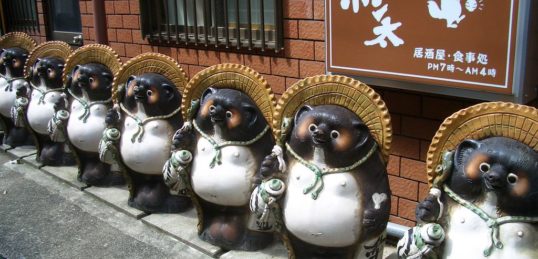
- Tanuki – This is a small, raccoon-like dog creature which are mischievous tricksters, often having a bottle of sake in hand, with a straw hat. You are able to find dozens of small, Tanuki statues scattered around Asakusa in the same district as the Mokubakan Theatre, outside numerous restaurants and bars as marketing tools to invite passersby and tourists to come in and drink. For some reason, these Tanuki are also often depicted having comically large testicles.
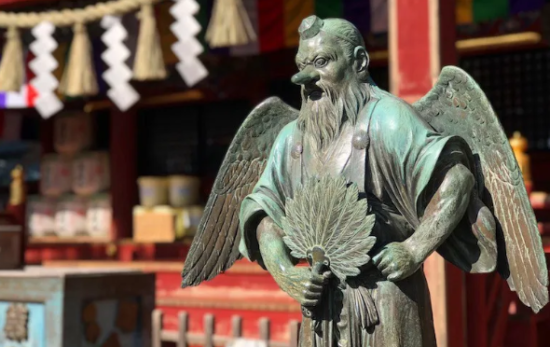
- Tengu – A humanoid, bird-like creature which is a constant nuisance for humanity, regularly possessing and misleading humans. They often have extreme speed, the ability to fly and control natural elements such as the wind.
- Kirin – If you have been to Japan, or have extensive knowledge about Japan, you may have heard of the popular beer Kirin. The beer is inspired by the legend of the Kirin: a majestic, fire-breathing yet gentle creature symbolizing purity and wisdom. The Kirin is the size of a lion, covered in reptilian-like scales for skin. It is considered a messenger between the heavens and humanity, carrying out the tasks of the gods in the world of the living.
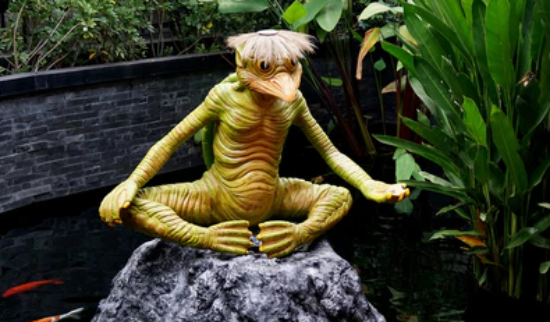
- Kappa – Likely the least known creature on this list, the Kappa is an ugly, two-legged turtle creature. It is a mischievous but dangerous creature about the size of a young teenage boy. Their most distinctive feature is a concave head with a water bowl on their scalp. The amount of water in their head is their source of strength and life, meaning that if the water spills or is removed, they will become weak or even die.
Famous Mythological Locations in Japan
1. Takachiho Gorge – Miyazaki
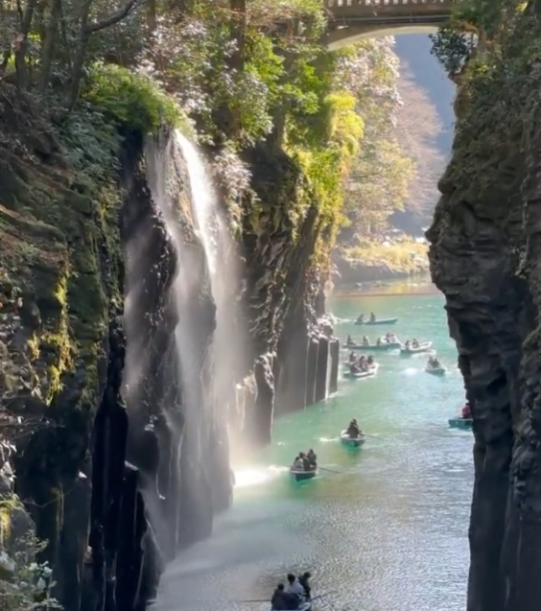
Takachiho is a small town in Miyazaki, far south-west Japan with a tiny, estimated population of just 11,000-12,000. The Takachiho Gorge (Takachiho-kyo) is a popular tourist destination due to its incredible natural beauty. It is a canyon by the Gokase River with natural rock walls of up to 100 meters tall, with a river width of just 3 meters at some points. The main attraction of the gorge is the Manai Falls.
Akin to Mount Fuji, the Gorge has spiritual connections to numerous Japanese gods. It appears in some of Japan’s oldest texts from years 700-800, as a location where the Sun Goddess Amaterasu is thought to have hid from her brother***. As she is the Sun Goddess, the sun also went into hiding, sending Japan into darkness. In an attempt to have the sunlight return, all of the other Japanese deities are said to have gathered at this gorge to plan her return. It is also thought to be the arrival location of the Sun Goddess’ grandson, Ninigi no Mikoto, when he first came from the Heavens to Earth.
2. Mount Fuji
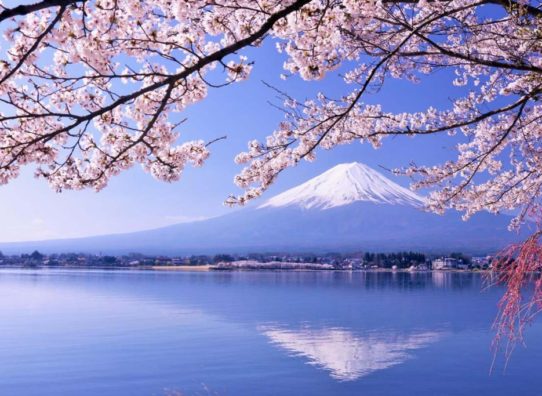
Mount Fuji is an active volcano, the tallest mountain in Japan, the second tallest mountain in Asia, and the seventh-tallest mountain on Earth. It is also officially recognized as one of Japan’s “Holy Mountains”. There has been centuries of spiritual practice, pilgrimage, and tradition surrounding Mount Fuji, and many folktales were created as a way to rationalize the mystique of the mountain. In the Shinto religion, Mount Fuji is associated with a Mountain Goddess named Konohanasakura-hime, or Kono-hana, who is part of a family of Japanese gods. Even in the modern day, there is a shrine dedicated to Kono-hana at the top of the mountain which is thought to keep climbers safe.
3. The Land of the Gods, Izumo Taisha
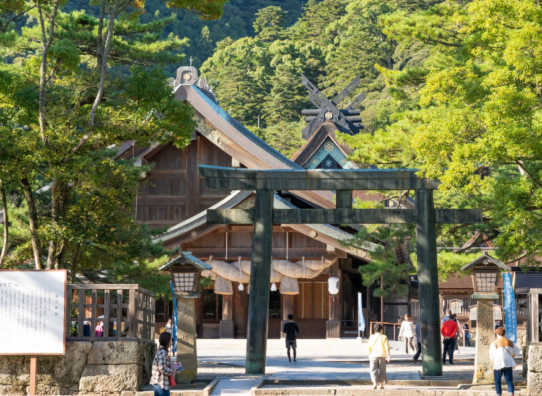
This is widely believed to be the oldest Shinto shrine and one of the most important shrines, located in Izumo in West Japan. Also known as Izumo Oyashiro Shrine, the worshipped deity of this shrine is the “Great Lord of the Land”, or “Okuninushi no Kami”, who is believed to be connected to comradery and the relationships of people in the community. The exact date this shrine was built is unknown, and it pre-dates several of Japan’s oldest written records and literature, going all the way back to the years 700-800. A huge portion of Japan’s mythological records also originate in the region of Izumo, also known as the realm of gods, and the land of myths.
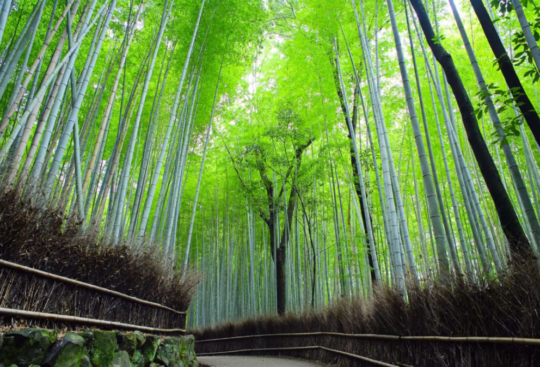
4. Sagano Bamboo Forest – Kyoto
One of the most popular tourist locations in Japan, this bamboo forest is located in northwest Kyoto, and has been a culturally important landscape since the year 800. At the forest is the Nonomiya Shrine, where the stories of (1) The Tale of Genji 源氏物語, and (2) The Noh play “Nonomiya” take place. In these well-known stories, the forest becomes a gate between the human world and the sacred spirit world, and is also believed to be a location where women hand-selected by the gods will pass through as a ritual of transformation. Although not specifically attributed to this forest, there is strong belief that spirits and yokai inhabit bamboo forests.
5. The 7,000 Year Old Tree, Jomon Sugi – Kyushu
This famous tree is location in a tropical island south of Kyushu (West Japan) full of trees which are over 1000 years old. However, the Jomon Sugi, is theorized to be the oldest tree in Japan, with a height of around 25 meters tall, and a huge trunk about 5 meters thick, with a circumference of 15 meters, about the width of 3 family cars. In the Shinto culture, trees of extreme age are considered to be the resting places or homes of kami (spirits, or gods).

6. Yonaguni Underwater Ruins – Okinawa
Of all the inhabited islands of Okinawa, Yonaguni is the most remote, taking about 4.5 hours to arrive by ferry. There is a mysterious, underwater rock formation south of the island, which has left Japanese scientists confused since the 1980s. This formation is known as the Yonaguni Monument (or Yonaguni-jima Kaitei Iseki, which means Yonaguni Island Submarine Ruins). It appears to be man-made, but also is estimated to be several thousand years old, before humanity had the capabilities to create such a monument. This has lead to theories of a lost civilization, akin to the Western conspiracy of Atlantis. It is possible to scuba dive and explore the site of the monument with a Japanese tour guide.
