
Taishu Engeki Stories 国定忠治 – Tadaharu (Chuuji) Kunisada – The Life of An Honorable Thief
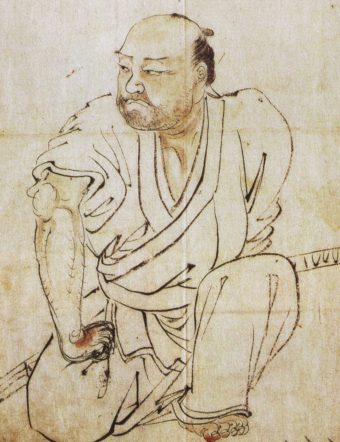
This is a story of a Robin Hood-esque character of the 1800s in Japan. The man known as Chuuji Kunisada was born as Nagaoka Chuujirou in the year 1810 in the Gunma region of Japan.
Chuuji was born into a wealthy farming family, growing produce such as rice, wheat, and silkworms, growing up in his home region of Gunma living a modest life.
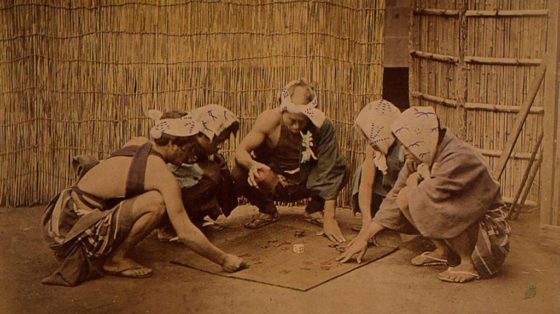
The primary plot point of Chuuji’s story is after he inherits the position of a Bakuto 博徒 (the leader of a gambling group) in the Nagano region of Japan. Chuuji sells his possessions to provide food and shelter for the needy, attacks and flees from the Japanese police, and continuously battles with other Bakuto to gain power for him and his family.
Throughout Taishu Engeki, there are many unique stories to be told, whether original stories or well-known Japanese folktales or historical events. This series of blogs seeks to introduce and explain popular Japanese theatrical stories for English and foreign audiences.
Giving To The Needy
Over time, his influence became strong enough that the area he was living and working in became famously known as a “thieve’s quarter”. He would often fight other bakuto in surrounding areas, especially one man named Isaburo Shimamura, who Chuuji eventually murdered in 1834 after their conflict continually escalated. This murder caused Chuuji to flee his home of Shinshuu, beginning his life as a criminal fugitive.
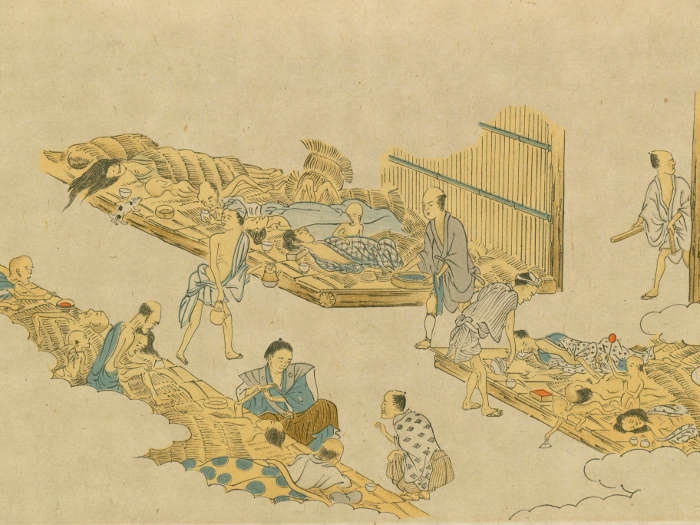
Despite his reputation, Chuuji became a folk hero. In the 1830s, there was a series of flooding and unexpectedly cold weather, causing “The Great Tenpo Famine” in Japan from 1833-1837 in the north of mainland Japan. This led to severe crop failure, widespread famine, causing an estimated 200,000 – 300,000 deaths in Japan. In response to this event, and in response to a lack of government support for the needy, Chuuji sold his estate and belongings to purchase and provide rice to the less fortunate, starving civilians. Official recounts of the story describe Chuuji as “a thief who repeatedly aided the poor”, akin to Robin Hood in English/Western storytelling. This specific story is the subject of many dramas such as Kodan, Nangokok, and various movies.
The Capture of Chuuji
However, Chuuji’s good-will did not relieve him of his fugitive status. As he gained more fame and notoriety, he became more visible to the police. After the Tenpo Famine, in 1838, police raided a casino in Serata, finding and arresting a friend and henchman of Chuuji. Chuuji attempted to rescue his friend and flee from the police, but failed, causing Chuuji to flee once again. This police raid led to 1 arrest, and 2 executions of Chuuji’s important family members. In retaliation, two Kanto police were murdered by Chuuji’s associates. From this point, Chuuji was no longer just an outlaw, but a high-priority target of the shogunate (military government).
In 1846, at 36 years of age, Chuuji suffered a stroke which weakened him greatly. He resorted to hiding in thief territory, his family’s numbers dwindling, attempting to live out his remaining days quietly. He remained here safely for about 4 years, until he was captured by the Japanese government in his hometown in Gunma.
If you are interested in seeing dramatic Japanese theatre plays, such as the story of Chuuji Kunisada,
the theatre offers a different theatrical drama and dance show every single day.
You can read more about Taishu Engeki history and culture here
You can purchase tickets for the Asakusa Mokubakan theatre show here