
What is a Kabuki Show? Understanding the Traditional Japanese Art Form
A Rich History:
From the Edo Period to Modern Art
Kabuki emerged during the Edo period of Japan, the early 17th century, and its creation is accredited to a woman named Izumo no Okuni. Although these performances originated with female and male casts, the Tokugawa shogunate eventually imposed new behavioral and moral laws that prevented women from being on stage. This led to kabuki being taken up by all male casts, and even though those laws no longer exist, kabuki is still male only.
Kabuki is considered such a strong aspect of Japanese culture that it has been recognized by UNESCO as Intangible Cultural Heritage. Actors who are considered to have contributed greatly to the artform can also be recognized, and they are known as National Treasures. It’s an extremely traditional, respected art form, and in modern times new formats have been created, such as Super Kabuki.
How to Watch a Kabuki Show: Tickets, Schedule, and Guide
Full-Day vs. Single Act Tickets
As kabuki performances are generally quite long, the show is often divided into several acts over the course of a day. Depending on where you go to watch, you can have the choice of seeing the full performance (which will likely last for several hours) or seeing only one of the acts (known as Hitomaku-mi). If you’re considering seeing a performance for the first time, I’d recommend going for just one of the acts. This is going to be the best value, most accessible option for first timers. That being said, this option is generally limited to Kabuki-za Theatre in Tokyo.
Where To Book Your Tickets?
If you’re looking to buy tickets ahead of time, make sure to go to the official website (Kabuki Web) for the most accurate schedule and the ability to get an online reservation. It is possible to buy tickets at the theatre’s ticket office, especially if you’re only going to a single act, but if you do, be aware there’s no guarantee of getting exactly what you want. Because you may have the option of single-act or full-act tickets, and because shows are changing frequently, ticket prices will vary. Generally speaking, the price can range from around ¥4,000 – ¥20,000, or $25-$150USD (exchange rate as of May 2026), depending on the type of seat you are seeking. You may be able to get some single-act tickets for cheaper, however.
Key Features of Kabuki
The word kabuki itself is made up of three different characters which mean song, dance, and acting skill. These art forms are all combined to create a kabuki performance. The shows are dramatic plays, usually about a historical event or telling a moral story, that also include elegant, intricate dance sequences set to music.
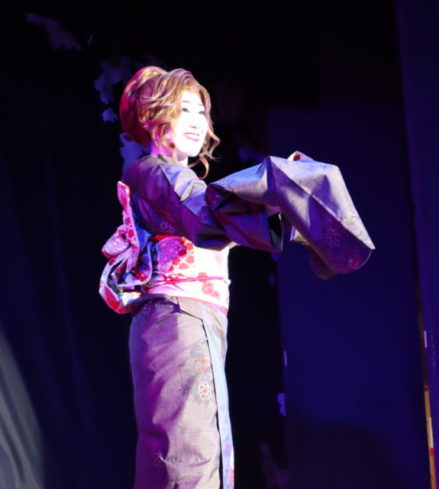
Since the casts are all male, men must play both male and female roles. Most kabuki actors spend their whole lives perfecting their craft, so they’ll either play only male characters, or only female characters. Those that specialize in female roles have a specific name, onnagata. They do everything they can to embody the feminine: wear feminine kimono, do their makeup, pitch up their voice, etc.
The costumes for both male and female roles are elaborate, and the makeup, known as Kumadori, is very symbolic. Kumadori not only helps express the role of the character, but the status of the actor. For example, a white background color represents a good or noble person, a brownish tone is a townsman or evil doer, and red represents a servant or retainer of an evil doer. Finally, the eyes, eyebrows, and mouth are painted using black, red, blue, or other colors. There are many different ways to paint the face that also tell more about the character.
Where to See Kabuki in Japan – Top Theatres and Locations
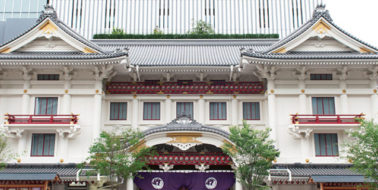

Tokyo’s Premier Kabuki Theatres
Kabukiza Theatre (Ginza, Tokyo)
Located in Ginza, Kabukiza Theatre is the undisputed main theatre for Kabuki performances. It’s best known for offering single-act tickets, and it offers English audio guides. There is direct access to the theatre from Higashi Ginza station, Exit 3. If you want to eat in the theatre’s restaurant during intermission, it is recommended that you make a reservation at least two days ahead of time. Otherwise, you may eat or drink in your seat.
Shinbashi Enbujo Theatre (Ginza, Tokyo)
This venue is known for offering new and modern productions, including Super Kabuki. It does not offer English audio guides, but an English synopsis of the play can be found in a few pages at the end of the Japanese program. This is also located in the Ginza area, and you can arrive at Higashi Ginza station and go to Exit 6. Restaurants are available in this location during intermission as well, but again reservations are recommended. You may eat and drink at your seat.
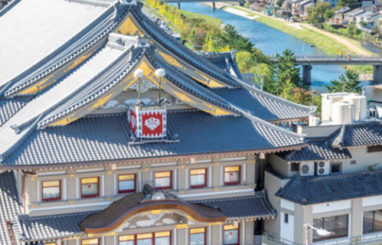

Kansai’s Premier Kabuki Theatres
Minamiza Theatre (Kyoto)
This is one of Japan’s oldest theatres, and it’s located in a beautiful spot. It’s known to be especially gorgeous during events like the annual Kaomise Festival. You can arrive at Kyoto Kawaramachi station and go to Exit 1, and then take a 3 minute walk. You can also take a taxi directly from the JR Kyoto station. English audio guides are available depending on the performance. There are restaurants inside the theatre, and reservations are recommended. You are able to eat and drink at your seat.
Osaka Shochikuza Theatre (Osaka)
This theatre is known for being one of the first Western-style theatres in the Kansai area. You can arrive at Namba station and use Exit 15B, which from there is a one minute walk. There is no mention of English audio guides. Furthermore, there are no restaurants within the theatre. You can make reservations for nearby restaurants in front of the theatre before the show starts.
Kabuki Etiquette, and Tips for a Great Experience
What To Wear – Kabuki is a very respected art form, but don’t stress too much about the dress code. A smart casual outfit is more than ok, and formal, traditional wear is not required.
Food, Drinks, and Breaks – If you choose to attend a full kabuki performance, there will be intermissions. During these intermissions, you may be able to go to a restaurant either inside the theatre or very nearby. There you can enjoy food and drinks. If you are unable to get a spot inside one of these restaurants, you are able to drink and eat in your seat. However, this is only during intermissions. Eating and drinking during the performance is not allowed.
Photography, and Respect – You may be tempted to snap a picture or take a video during the performance, and I’d understand the desire. However disappointing, taking photos and videos of the performance is strictly prohibited. Each theatre may also have their own specific rules, such as no smoking, that you’ll want to be sure to check on the official website before your visit.
Kabuki is a wonderful, elegant, vibrant, and traditional experience you won’t want to miss out on during your next trip to Japan. From the stage tech, costumes, and actors themselves, you’ll never find yourself bored. Not only is it captivating, it can provide deep cultural and historical insight. There’s a reason it has remained popular for centuries. Don’t miss this opportunity. Use this guide to book your tickets and watch a kabuki performance in Tokyo, Osaka, or Kyoto today.
Kabuki Web Link: https://www.kabukiweb.net/