
Japanese Professional Wrestling and Theatre: Two Stages, One Language Written by Liam Hallin
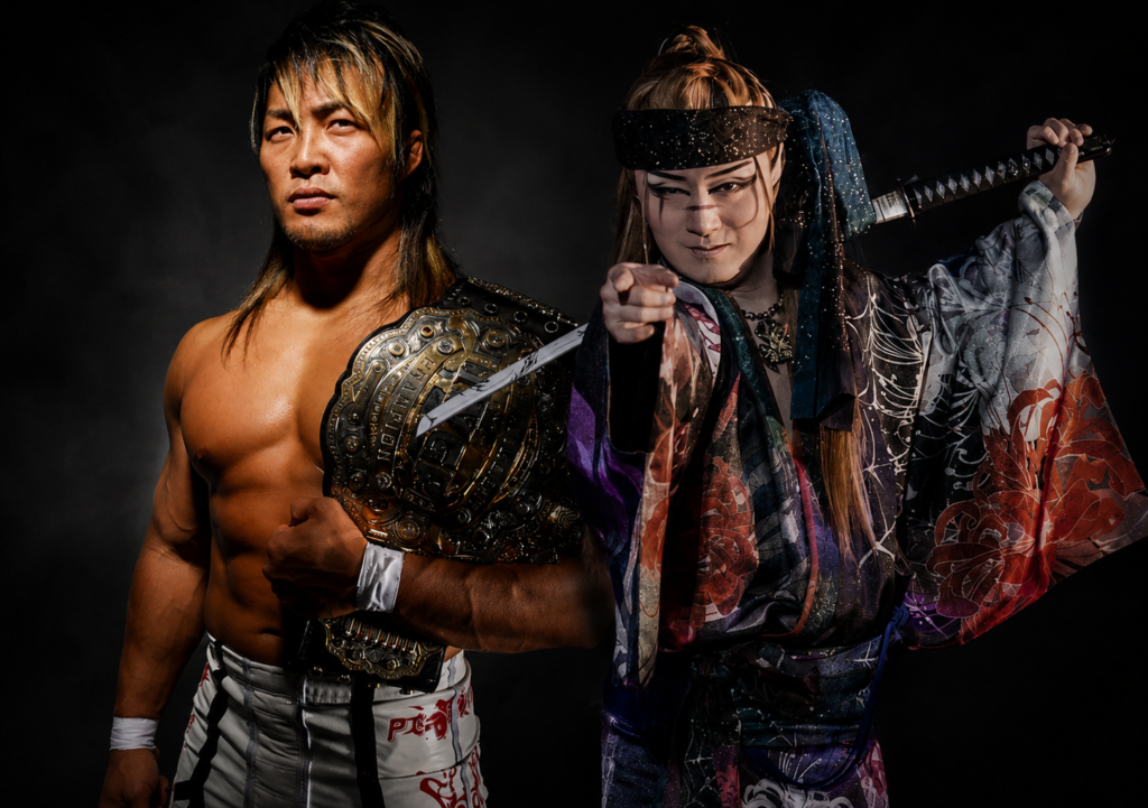
Japanese Professional Wrestler 'Hiroshi Tanohashi", and Taishu Engeki Performer
Japanese popular theatre, especially Taishu Engeki, and Japanese professional wrestling share striking similarities in how they entertain audiences through performance, emotion, and spectacle. Although one is staged theatre and the other is presented as combat sports entertainment, both rely heavily on storytelling and character-driven drama.
Body Language and Shintai Hyougen
One major similarity is physical storytelling and body language. Shintai Hyougen in Japanese means non-verbal, physical expression. In both Taishu Engeki and professional wrestling, performers communicate emotions primarily through movement and body language. A dramatic pose, facial expression, or controlled gesture can instantly signal pride, anger, heartbreak, or triumph.
Wrestlers use body language in entrances, matches, and post-match moments to build character, much like Taishu Engeki theatre actors on stage. Modern wrestling promotions such as New Japan Pro-Wrestling and World Wonder Ring Stardom demonstrate how wrestling in Japan often embraces theatrical presentation.
Matches are not only athletic contests, but emotional narratives shaped by pacing, character, and dramatic payoff. If you are watching wrestling via streaming or television, the art form also utilizes surprisingly impressive cinematography to ensure important facial expressions are visible, and specific scenes are framed correctly to portray the story.
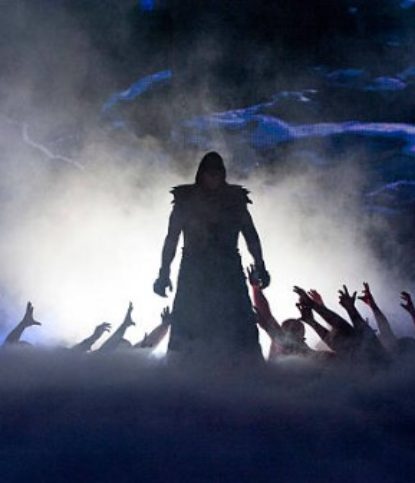
'The Undertaker's' iconic cinematic entrance
Storytelling Through Costumes
Extravagant outfits are another clear connection.
Taishu Engeki performers often wear elaborate costumes inspired by historical Japan, featuring vibrant colours, dramatic hairstyles, and extravagant accessories. Japanese wrestlers similarly use bold ring gear, masks, jackets, and entrance attire to establish their identities.
Typically, during a wrestler’s entrance prior to the match, they will wear extravagant robes, jackets, masks, and extra accessories, then bearing down to their ‘ring gear’ before the beginning of the match. These visual elements of the outfit help audiences instantly recognize characters personalities, and their role in the story.
Both Taishu Engeki performers and professional wrestlers, if they become well-known enough, will become synonymous with specific outfits and themes. For example, Tachibana Gekidan’s Chairman, Daigoro, is known as the “Prince of Onnagata” due to his skill and elegance in wearing kimonos. Various professional wrestlers may become associated with wearing masks, donning signature hairstyles, or from utilizing accessories or weapons.
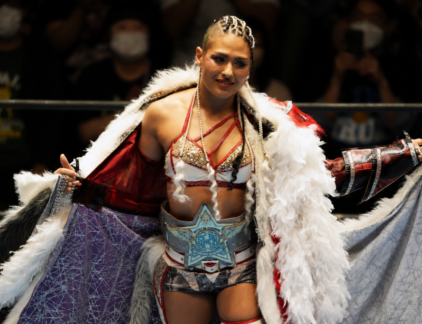
© 2026 World Wonder Ring STARDOM - 'Giulia', donning her famous corn-row hairstyle
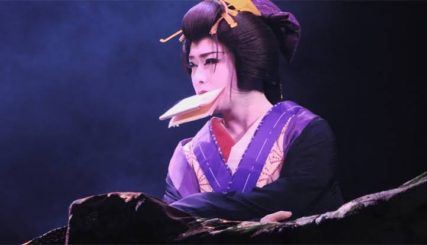
Famous Onnagata performer 'Tachibana Daigoro'
The Soundtracks and Sound Effects
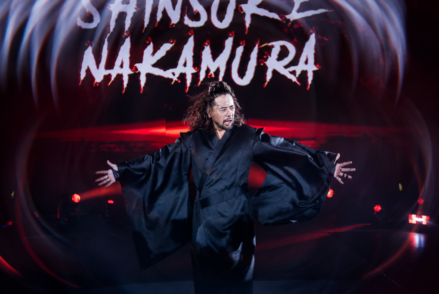
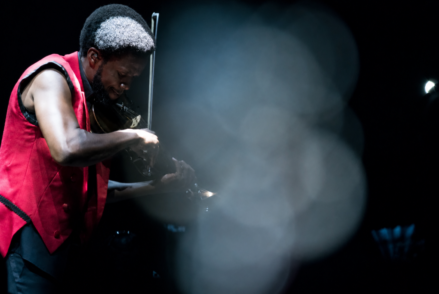
Stage music also plays a central role in both forms. In Taishu Engeki, music supports the performer, providing emotional and atmospheric context, and allowing the audience to participate in call-and-response, or clap along to the music.
In wrestling, entrance music is essential for creating excitement for the upcoming performance. A wrestler’s music often becomes inseparable from their persona, triggering immediate audience reactions, such as the famous “coin drop” sound effect of Kazuchika Okada’s entrance theme which creates an instant crowd response, a “pop”. There is also the theme of Minori Suzuki, “Kaze ni Nare – The King to the World”, which is a sing-along anthem, allowing the audience to participate in the performance, creating a unique relationship between the performer and audience.
The Importance of Audience Interaction
Audience interaction is perhaps one of the strongest parallels. Both Taishu Engeki and Japanese wrestling thrive on breaking the fourth wall. Performers directly acknowledge spectators and build a shared emotional experience. Audiences cheer, react, and emotionally invest in the action. The connection between performer and audience becomes part of the performance itself.
To fully enjoy both forms of theatre, the audience must allow themselves to be immersed in the art form. The Taishu Engeki audience understands they are watching a play, or that they are watching a man dress as a woman (onnagata), yet they allow themselves to believe what they are watching is true.
The same can be said about professional wrestling. The audience is aware they are not watching a competitive sport, yet they are allowing themselves to be immersed in the story and the art form, cheering on the “good guy/babyface”, whilst booing and hissing at the “bad guy/heel”. The audience is actively contributing, becoming it’s own character in the show.
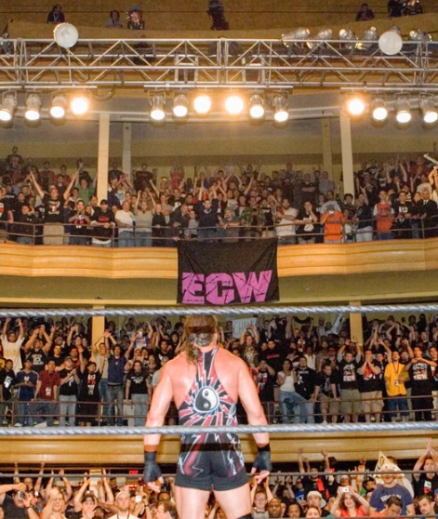
Famously interactive and energetic ECW crowd (2005).
The Rising Popularity of Female Performers
Another shared trend is the rising popularity of female performers.
Women have become increasingly prominent in both industries, challenging traditional gender expectations and attracting wider audiences. In wrestling, all-female promotions like Stardom Wrestling have elevated women’s wrestling to new heights, even gaining a niche, dedicated audience overseas.
Similarly, in Japanese theatre, female performers continue to gain popularity and influence in traditionally male-dominated spaces. Taishu Engeki was introduced to combat the strict, male-only limitations of Kabuki, introducing more and more female performers to the stage once again.
Similarly to Stardom Wrestling, there is also all-female Theatre promotions such as Takarazuka Revue, which are gaining followers (currently at 300,000 followers on Instagram as of July 2026). Takarazuka Revue boasts an all-women cast, who perform both the masculine and feminine roles in a play.
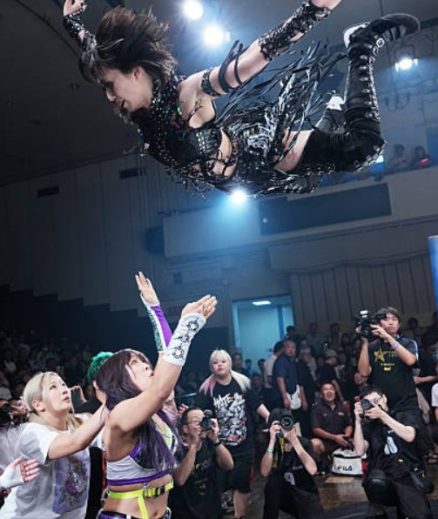
© 2026 World Wonder Ring STARDOM
Character Dynamics – Hero vs Villain
Both mediums also depend on clear heroes and villains. In wrestling, there are industry-specific terms:
- “The Babyface” (the good guy, or the protagonist); and
- “The Heel” (the bad guy, the antagonist).
Babyfaces inspire support and admiration, while Heels provoke tension and opposition. Taishu Engeki often presents similarly dramatic moral conflicts. Even when characters are morally complex, the audience may be encouraged to emotionally choose sides. In Japanese professional wrestling, international performers are often portrayed as the heel, to allow the Japanese hometown hero to prevail and win, much like Taishu Engeki storytelling where the hero must save his home from crime, demons, or outsiders.
Factions, tag teams, and theatre troupes also reflect similar organizational structures. In wrestling, alliances create layered narratives, loyalty, and betrayal. Tag teams and factions build long-term storylines and deepen character relationships. Taishu Engeki operates similarly through theatre troupes, where performers develop strong group identities and recurring dynamics.
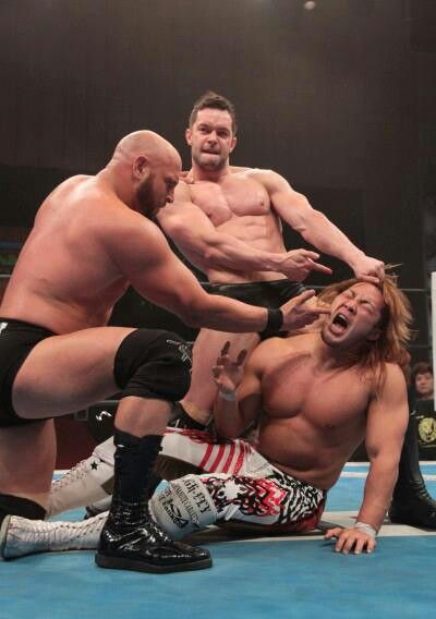
Hiroshi Tanahashi (babyface) vs Prince Devitt/Bullet Club (foreign heels)
Ultimately, both Taishu Engeki and Japanese professional wrestling blur the line between reality and performance. They combine physical expression, spectacle, music, and emotional storytelling to create powerful shared experiences between the performers and the audience. Whether on stage or in the ring, both forms celebrate drama, identity, and the timeless power of performance.
Edited and Published by Liam Hallin