
Kimonos and Onnagata in Taishu Engeki

Koyuji Matsukawa 小祐司松川
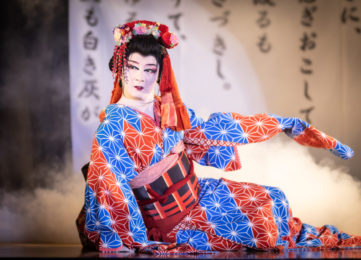
Koyuji Matsukawa 小祐司松川
In the world of Taishu Engeki 大衆演劇, costume is never just decoration. It is transformation, illusion, and storytelling all at once, and at the center of it all is the kimono.
Directly translating to “popular theatre,” Taishu Engeki blends melodrama, dance, and music into an emotionally direct, highly visual performance style. Unlike the codified traditions of Noh or Kabuki, it is more casual, accessible, and constantly evolving. This is also resembled by the kimonos that the actors wear on stage.
Costume Versatility on Stage
In everyday life, kimonos have become increasingly rare. On the Taishu Engeki stage, however, it is brought back to life, reimagined and exaggerated. Performers appear in a wide range of styles: From elegant, geisha-inspired kimonos to dramatic samurai silhouettes, and glittering, modernized designs, Taishu Engeki has it all.
These Kimonos are not historically accurate reproductions. Instead, they are stylized interpretations designed for visibility, movement, and emotional impact. Under stage lighting, the kimono transforms into spectacle.
Kimono as Transformation
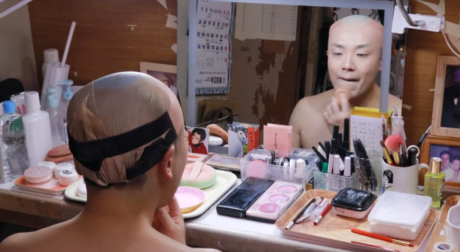
One of the most striking aspects of Taishu Engeki is the fluidity of identity on stage. Male performers frequently take on female roles, drawing from the legacy of “onnagata” in Kabuki but with greater flexibility and speed.
Here, kimono becomes a tool of transformation. A change in sleeve length, obi style (kimono belt), or wig can instantly shift a character’s gender, age, or social status. Kimono, in this context, functions almost like a language. It is supposed to resemble the character’s personality and place them within the frame. However, rather than reinforcing fixed identities, it allows performers to move between them, due to the constant costume changes.
Between Tradition and Pop Culture
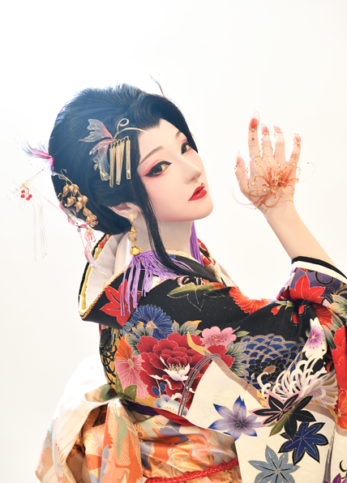
Taishu Engeki occupies a unique cultural space. It draws heavily on traditional imagery like geisha and samurai, but filters it through the aesthetics of popular entertainment. This creates a hybrid visual world, as historical references and silhouettes meet contemporary styling. Some of the kimonos feature rhinestones, neon colors and modern prints. Cuts are developed further or completely reinvented. Through this, nostalgia blends with up to-date-trends. Therefore, the kimono here is not preserved as heritage. It is reworked as a living, adaptable medium.
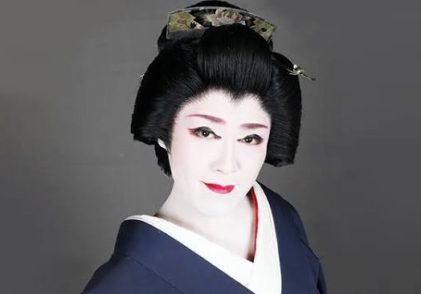
Tachibana Gekidan Chairman, Daigoro
The Kabuki Kimono – A Window To The Past
To understand what makes Taishu Engeki costumes unique, it helps to look at the
traditional standard. In Kabuki, kimonos are worn exactly as people in the old days actually did. They are beautiful, but they are strictly bound by historical rules, particularly regarding their patterns. The motifs used in Kabuki are largely limited to nature and classic symbols, such as:
- Pine trees: Representing wealth and longevity.
- Rabbits: A symbol of birth and fertility.
- Natural elements: Including bamboo, cranes, koi fish, and fans.
- Seasonal landscapes: Often featuring sakura (cherry blossoms) and maple
leaves. - Traditional patterns: Such as koshigara (checkered squares).
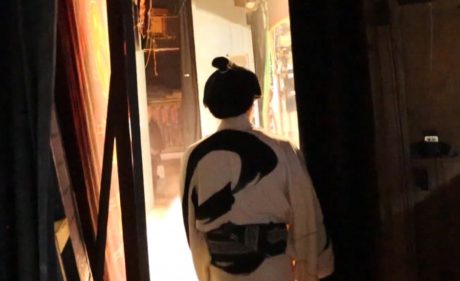
Form Meets Function – Stage Costumes
The uniqueness of Taishu Engeki kimonos goes beyond just their flashy appearance, they are highly engineered for the intense demands of the stage. Taishu Engeki actors portray all kinds of characters in a single performance, which requires them to constantly change costumes. To accommodate these rapid transformations, the garments are built for pure functionality:
- Lightning-fast changes: The obi (belts) often utilize Velcro instead of requiring complex, time-consuming traditional knots.
- Cooling illusions: Stage dances can get intense and physically exhausting. To keep the actors from overheating, costumers create the illusion of a full nagajuban (undergarment layer). They do this by attaching a simple top or a fake collar directly to the kimono using ribbons or Velcro, removing the heavy, restrictive layers entirely.
- Enhanced mobility: The clever tailoring and modern materials provide the absolute freedom of movement needed for energetic theatrical dances.
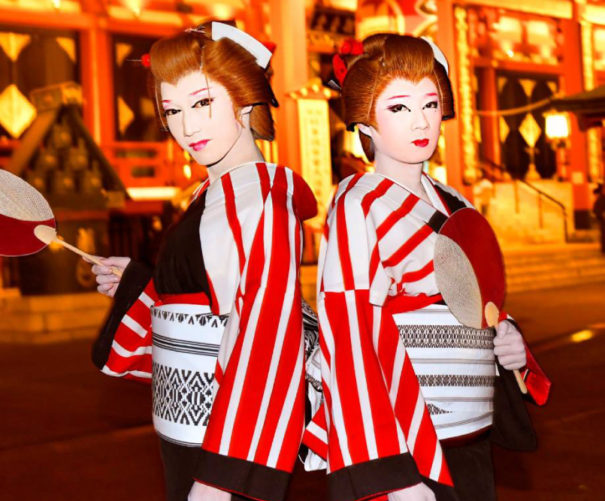
Ultimately, the differing styles of dress perfectly summarize the core philosophies of these
two theatrical worlds. While Kabuki is deeply rooted in preserving tradition, Taishu Engeki
is all about celebrating individuality. By blending extreme functionality with a modernized,
eye-catching aesthetic, Taishu Engeki kimonos allow actors to bring fresh, vibrant energy
to the stage every single night.
In Taishu Engeki, kimono is not about authenticity, it is about possibility. It is a medium through which performers construct identities and transform the stage into a world of heightened emotion and visual intensity. Somewhere between theatre and fashion, tradition and reinvention, the kimono becomes something else entirely: not a relic of the past, but a tool for performance in the present.
Written by Emma Lachenmann,
Edited & Published by Liam Hallin